

Until I was twelve years old, I studied in the French school system, where drama meant Molière, Corneille, Racine. Attending a play usually meant shows such as The Sound of Music or My Fair Lady. Then, a decision was made that I would switch to an English school. So, at age 13, I started at Westminster School. It was the late sixties, and the world opened up.
I attended a student performance of Waiting for Godot performed in French in a small room with a modest platform, and I sat at the rear. In terms of music, I was quite advanced – I already knew all the experimental sounds that had been emerging. I’d experienced the Mothers of Invention. I’d seen lots and lots. But I was unaware there was material of this kind. I quickly realized that, just like in music, there was a whole new world out there.
I am unsure how fluent the French was, but it wasn’t important what they were expressing. It was just so conceptual and lively, with a kind of built-up suspense. And then, naturally, it erupts with the entrance of Pozzo and Lucky. The performance was staged by older boys, including Nigel Planer as Lucky. He was such a presence on stage. And he has to deliver that extraordinarily baroque monologue. In French. It was amazing.
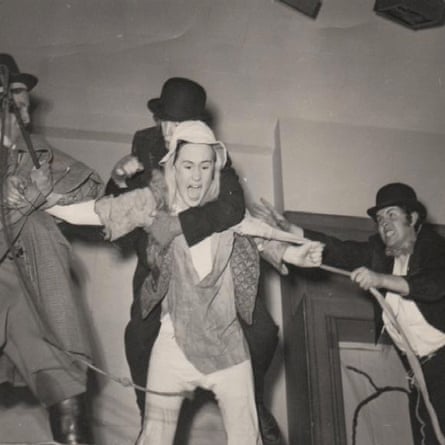
I loved the idea that very little needed to occur, you know? That one thing happened and then it continues endlessly and then you have the young messenger at the end explaining that Godot is not arriving today. It addressed temporality and activity and plot. Or their absence.
We had been taught all these rules about what theatre was, but none of them applied here. I was deeply intrigued by how little was going on. Much later when I was mixing records, I would attempt to transform them into something similar. When a fresh sound came in, I’d remove other instruments and intentionally highlight them. So you really heard that piano or that guitar or whatever it was. That sense of minimalism … I learned that with Godot.
And yet it has a story. It really does. I mean, they are fully realised characters. They are so alive, the two protagonists, in their mutual affection, like an old married couple. I don’t know how my life would have turned out if I did not attend that show. To that institution and that play then. It just awakened something in me.
We were let out on Saturday afternoons, and I started going matinees at the theatre venue every time there was a fresh staging. So you would experience works by modern playwrights. But the gateway to all of this was Godot.
I have so little recollection of the actual show, except I know that it was consistently engaging – it had me at the edge of my seat. What I learned is that there don’t have to be any rules. It definitely influenced how I worked with the artists that I signed to my label. I even had the musical group compose a track around “I Can’t Go On, I’ll Go On”. I just instructed them: “I want a song with that name.”
I think it made me more fearless, too, because you should not fret about failure if you subscribe to the playwright’s philosophy.


